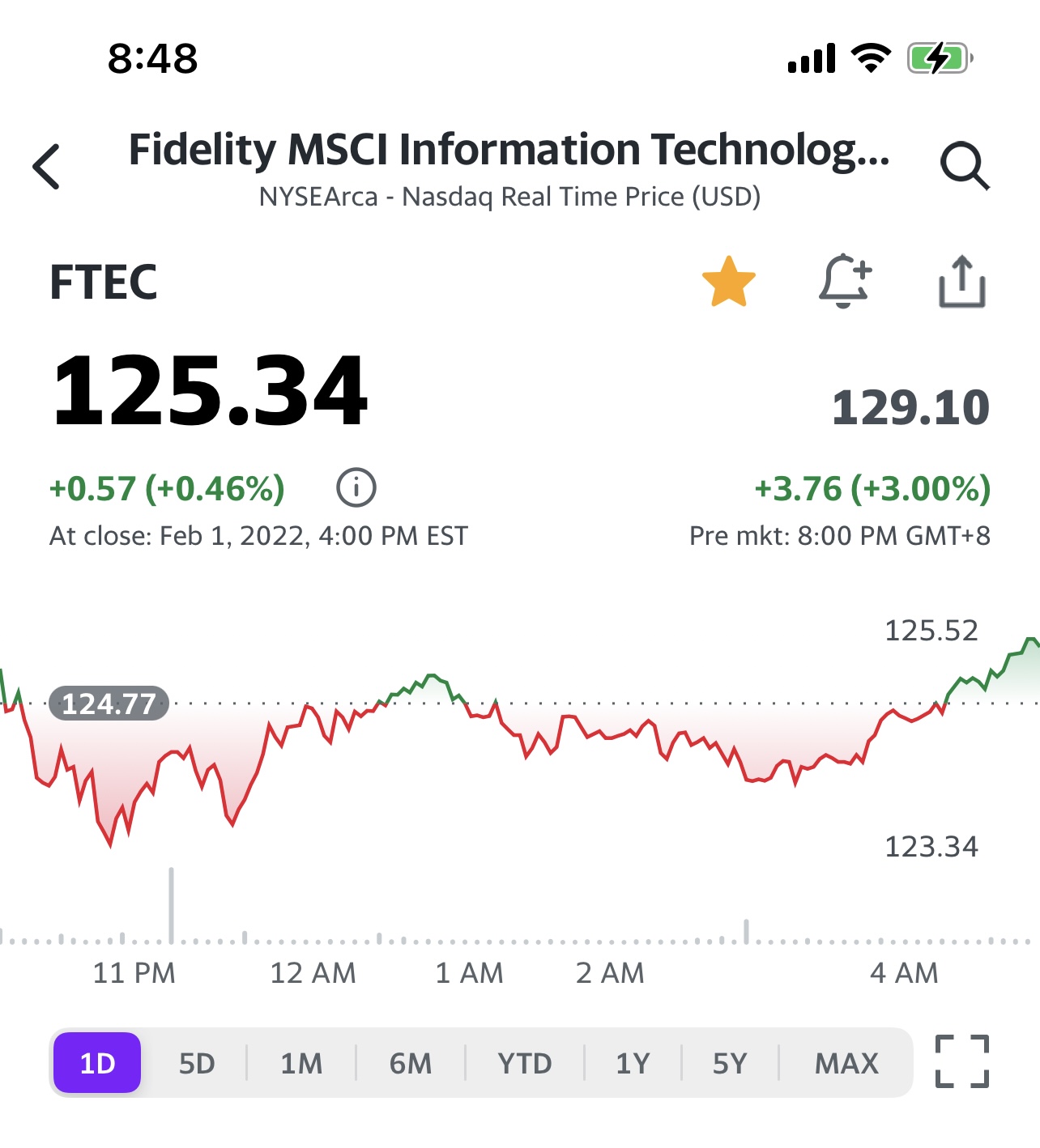
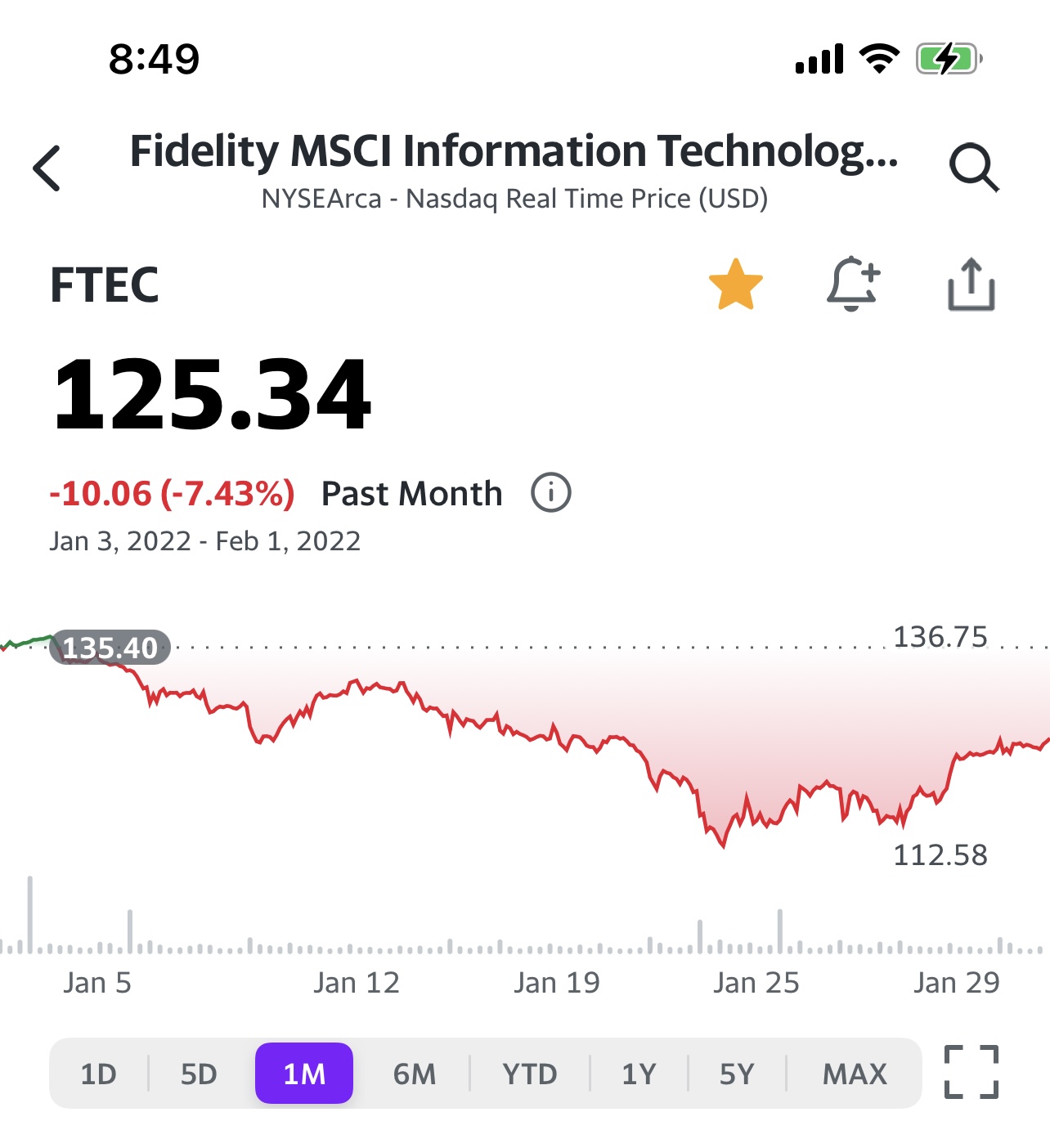
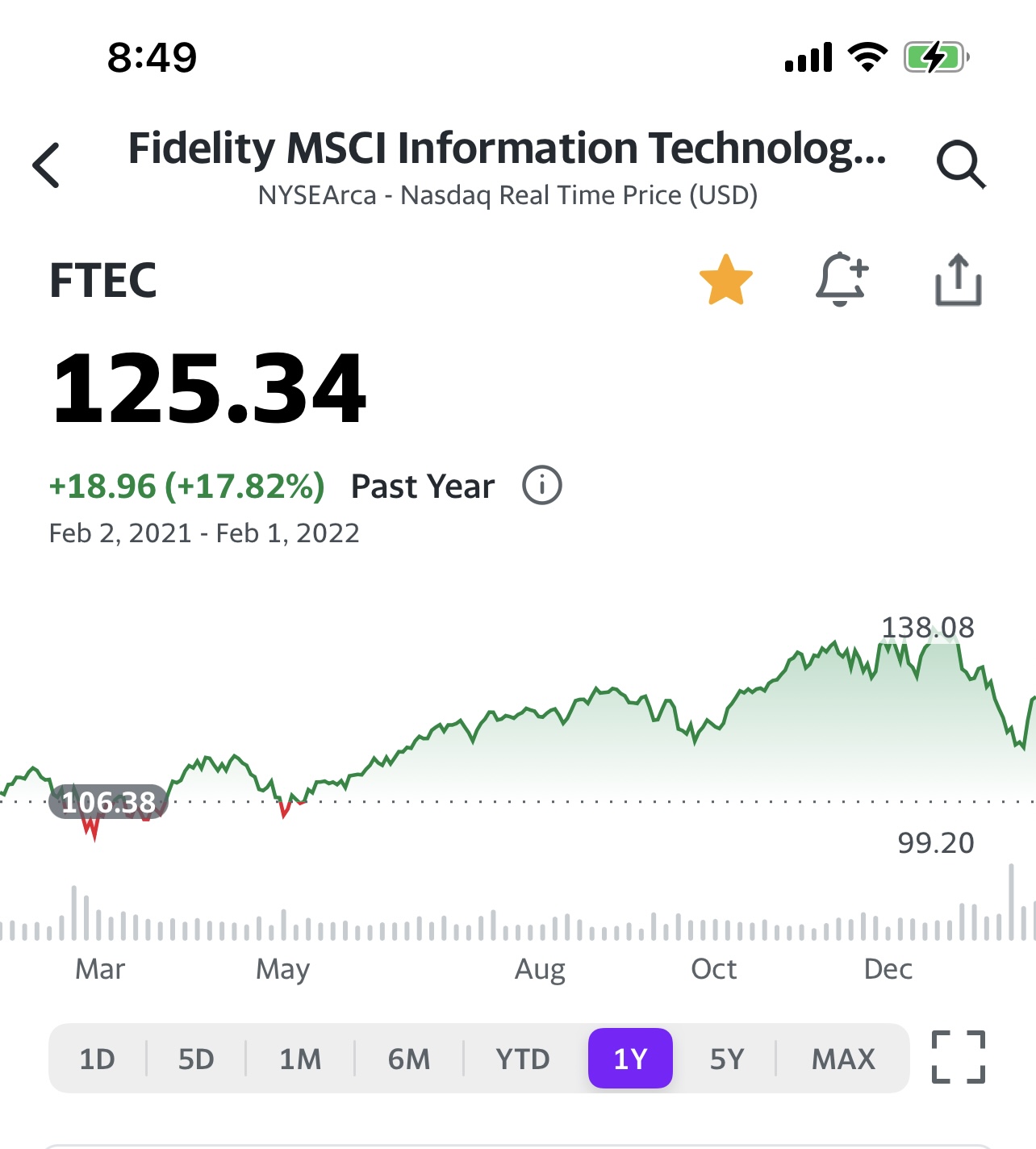
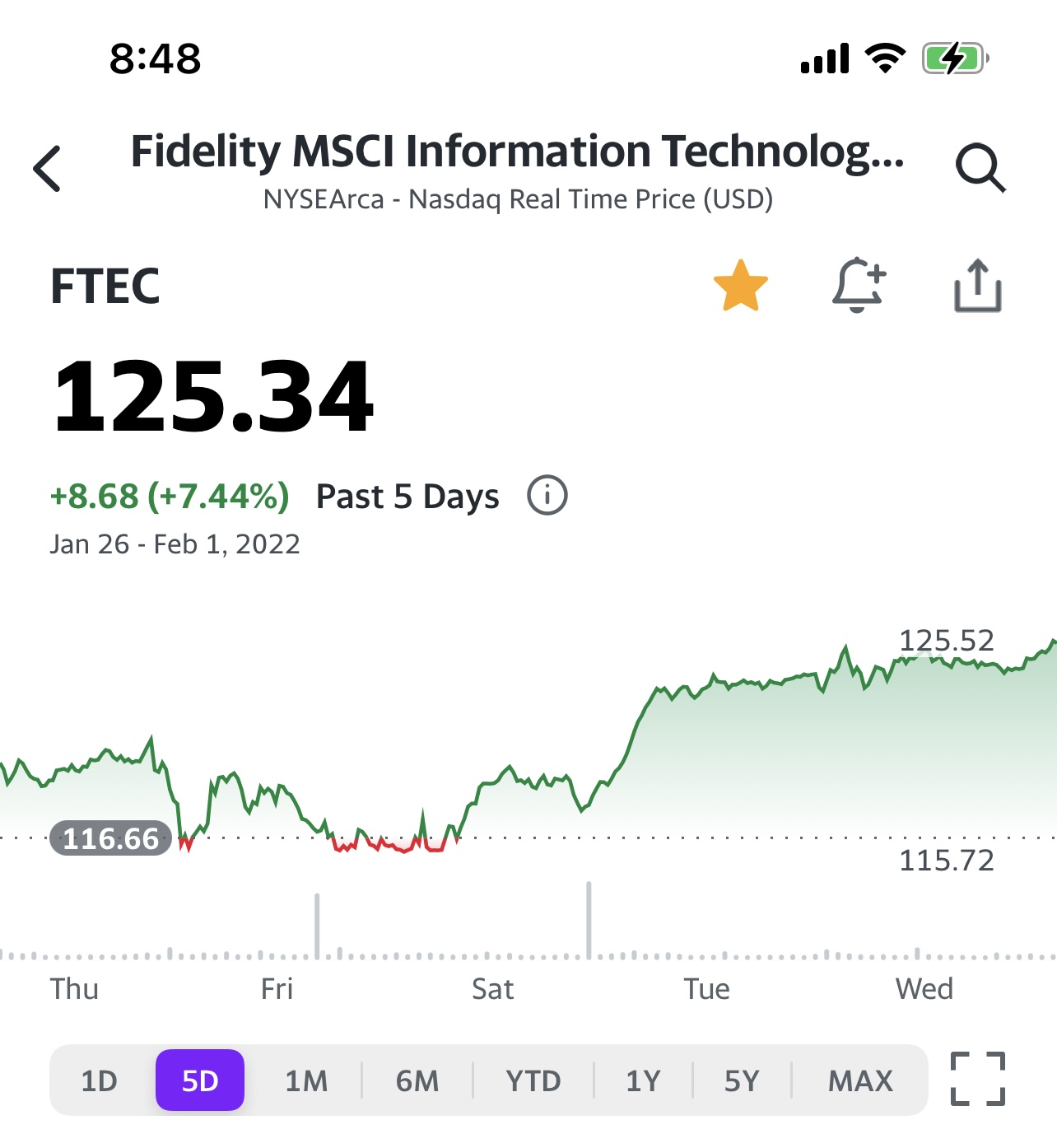
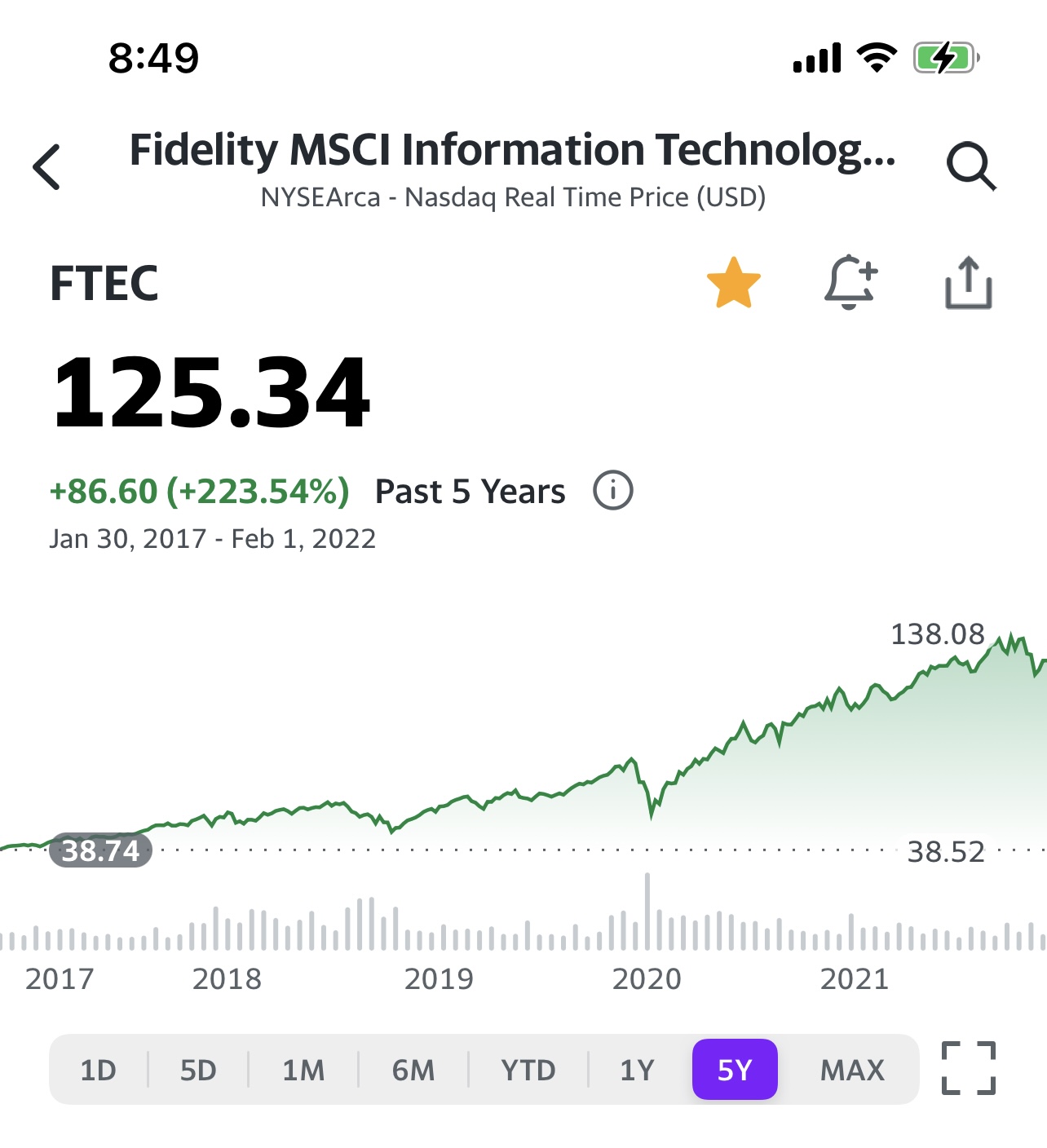
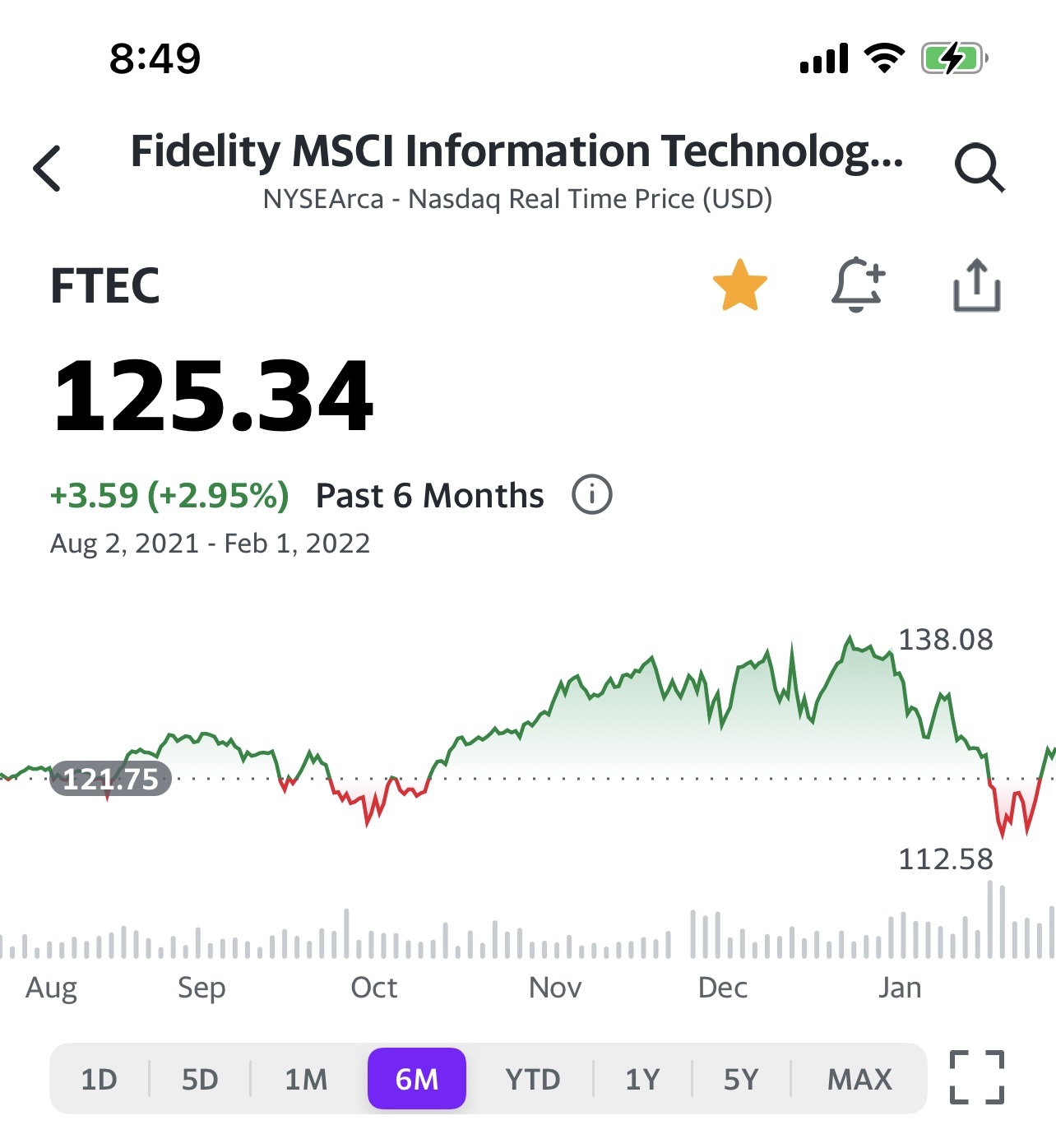
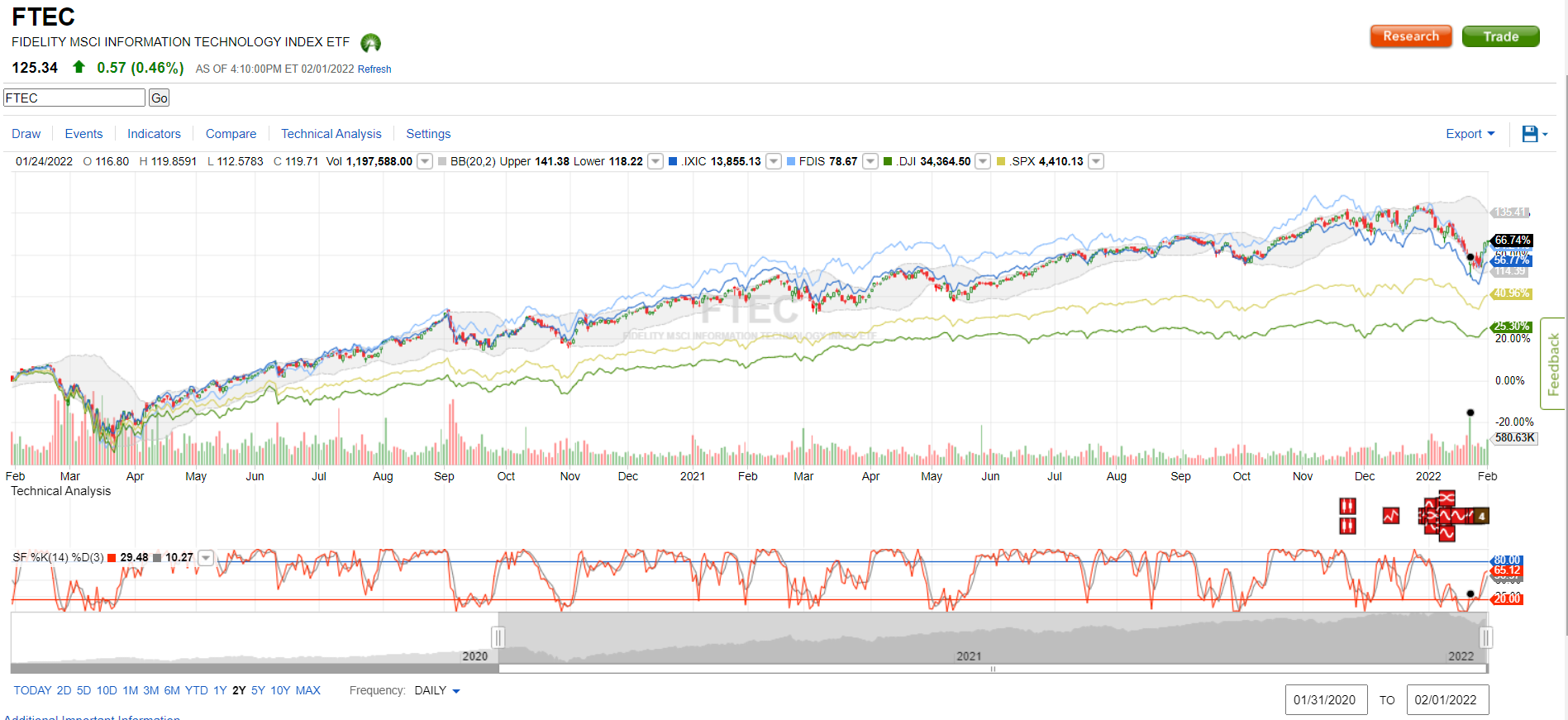
FTEC @ $125.34 – 20220222
February 2, 2022 Leave a comment
Gravel Cycling mixed with Cloud Computing – a retirement project.
June 27, 2016 Leave a comment
20160624, Friday
1. “losses loom larger than corresponding gains”
2. “losses and disadvantages have greater impact on preferences than gains and advantages”
3. “people feel losses more deeply than gains of the same value”
4. “if you look at your investments closely/frequently, you will miss the bigger picture”
Read more:
Investment-MyopicLossAversion0.pdf
Investment-MyopicLossAversion1.pdf
Investment-MyopicLossAversion.pdf
loss-aversion.behaviouralfinance
…
Related Posts:
Myopic Loss Aversion
https://blindcaveman.wordpress.com/tag/finance/
1d

5d

1y

3y

5y

10y

TechGiant

Fidelity Freedom

TRowe Price


May 14, 2015 Leave a comment
A person close to me failed one subject this semester in college. This person was devastated internally but is not showing it. This happened a few times in the past already. When I counseled this person, I don’t usually look at the current failure; instead – I cast a vision of how the future will look like. I explained to this person that the current failure matters but is not critical to the overall fulfillment of the vision, mission and objective.
School+Education+Job => 1 Make It – 2 Save It – 3 Invest It – 4 Enjoy It – 5 Share It
10 years from now, we will look back and reminisce this moment and see how irrelevant this failure is.
Here’s my notes of encouragement.
Vision: “Owe No One Anything”
Mission: “To give to those in need”
Objective: “Financial Freedom”
Metric:
1. Checking Account [increase]
2. Savings Account [increase]
3. Personal Investment [increase]
4. Retirement Account [increase]
5. Credit Card Debt [decrease/minimize]
6. Loans [decrease/minimize]
7. Salary [increase]
7 Strategies:
1. Find/keep a very stable/enjoyable job.
2. Find/keep a very stable/enjoyable spouse.
3. Save as much as you can.
4. Invest as much as you can.
5. Decrease/minimize/delete credit card debt.
6. Buy an affordable house.
7. Be 100% healthy – Body, Mind and Spirit
“8 Owe no one anything, except to love each other, for the one who loves another has fulfilled the law.”
https://bible.com/59/rom.13.8.esv

Related Posts: https://blindcaveman.wordpress.com/tag/finance/
March 19, 2015 Leave a comment
1001996.67 20150318: Tuesday 2209
ra48
ba47
br23
bt18
Tools You Need
Top Fidelity Multual Fund Search
MyopicLossAversion-ReadMe First
JAGLX-2015ReportBinder.pdf
Simulator-PersonalFinance.xlsx
Evaluating Mutual Funds
NAV-EvaluatingMutualFundsCorrectly.pdf
1. Don’t use NAV to determine buy/sell
2. Use Morningstar Stock Analysis Rating – Star Rating [pick 5 stars only]
3. Pay attention of the Funds Objective and Strategy
4. Use Sharpe Ratio, > than is better
5. Use Standard Deviation, < than is better
6. Use R2, performance matched benchmark, 0 is better, 1 is matched
7. Use Beta, <1 is not sensitive to market [good], >1=sensitive to market
8. Use overall performance of $10,000.00 chart
9. Compare to S&P the $10,000 performance overtime
10. Use management fee information, <1 % is good.
11. Use 3year, 5year, 10year consistent performance
12. Use inception date information, older=better
13. Use fund manager tenure, older=better
14. Use turnover rate information, bigger value=more trading activity
15. Use No Load Information, never pay for any transaction
Book Reading List
Mindmap-BookSummary-ThinkingFastSlow
Mindmap-BookSummary-TheWarrenBuffetWay
Mindmap-BookSummary-25HabitsOfHighlySuccessfulInvestors
MindMap-Investing-12RulesOfInvesting
Mindmap-BookSummary-Mindset
Tags: Finance
https://blindcaveman.wordpress.com/tag/finance/
10-Year look at the market – S&P 500 Index, Health Care Index and JAGLX during the 2008 market crash
S&P 500 Index- dropped –37%
Health Care Index –23%
JAGLX – 10%

10-Year look at the market – S&P 500 Index, Health Care Index and JAGLX Year 20150425
S&P 500 Index-increased by +79%
Health Care Index-Increased by +147%
JAGLX-increased by +262%%

ReadMe Articles:
https://ucfocusonyourfuture.mysecurebenefitsportal.com/financialfitnesslibrary/resource/85
https://www.mysavingsatwork.com/taxexempt/assets/370190_FidelityBrokerageLink.pdf
https://www.fidelity.com/insights/investing-ideas/overview
https://www.fidelity.com/insights/investing-ideas/the-right-way-to-pick-a-mutual-fund
https://www.fidelity.com/insights/investing-ideas/7-stocks-for-the-next-15-years
https://www.fidelity.com/insights/personal-finance/4-key-numbers-in-your-financial-life
https://www.fidelity.com/insights/investing-ideas/how-life-stages-shape-investing
http://en.wikipedia.org/wiki/Rule_of_72
http://www.moneychimp.com/features/rule72.htm
http://www.moneychimp.com/features/rule72_why.htm
https://www.khanacademy.org/economics-finance-domain/core-finance/interest-tutorial/compound-interest-tutorial/v/the-rule-of-72-for-compound-interest
What Are Mutual Funds
Type of Funds
Fidelity Mutual Fund Research
Top Fidelity Funds
Evaluating Investment Rate of Returns
Personal Rate of Return
Picking a Mutual Fund
Step 1: Determine why I want or need a new fund
Step 2: Find the funds or ETFs that meet my needs
Step 3: Learn the story of the fund
Step 4: Compare the fund to its peers, then check returns
Step 5: Choose the finalists, read the prospectuses, check with the analysts
Step 6: Check under the hood
Picking a Stock for Long Term Investments
[Not all stocks, however, are suitable long-term buys. A company you expect to be wedded to for 15 years should have six characteristics:]
1. a product that can endure and aren’t fads
2. a history of leaders who can adapt
3. a strong balance sheet
4. a benign competitive environment
5. a track record of innovation balanced by vigilance against taking on too much risk
6. a strategy that looks beyond the next year and certainly beyond the next quarter.
4 Key Financial Finance Health Index
Credit Score
Retirement Savings
Emergency Savings
Net Worth
Fidelity Account Health Checklist:
1. Check the current balance.
Go To Your Fidelity Account->Account & Trade Portfolio->Statements->View Online Statements->Select YTD->Click Retrieve Statement
2. Check the current Personal Rate of Return. [Do this in December of each year]
3. Understand Rule of 72. [use spreadsheet below to simulate]
4. Create a Brokerage Link Account to have more investing choices.
5. Get Top Performing Mutual Fund List
[Fidelity Fund List By Performance]
[ETrade Fund List Screener] Select-All Groups, Performance-5Year Top20, ShowMe 4-5 Stars, Check-NoLoad/No Transaction Fee, View Matches, Click Export to Excel
6. Exchange low performing funds from your research.
7. Fund Brokerage Account
8. Invest Brokerage Account with Top Performing Funds
9. Repeat Step 1 to Step 7 every 90 Days
Excel – Simulator-PersonalFinance.xlsx
https://dl.dropboxusercontent.com/u/80421698/Simulator-PersonalFinance.xlsx
Related Finance Topics:
https://blindcaveman.wordpress.com/tag/finance/
Netbenefits Health Check [individual performance]
1. Login to https://netbenefits.fidelity.com/NBLogin
2. Click the Portfolio Position Link [top right area]
3. Click each Ticker Symbol [+] sign to view the performance of each investment.
Netbenefits Health Check [overall performance]
1. Login to https://netbenefits.fidelity.com/NBLogin
2. Click Quick Links–>Transaction History–>Summary-Year to Date Change
3. Click Quick Links–>Transaction History–>Investments–>Performance & Research
January 15, 2015 Leave a comment

The Health Care Sector encompasses two main industry groups. The first includes companies who manufacture health care equipment and supplies or provide health care related services, including distributors of health care products, providers of basic health-care services, and owners and operators of health care facilities and organizations. The second regroups companies primarily involved in the research, development, production and marketing of pharmaceuticals and biotechnology products.


The Information Technology Sector covers the following general areas: firstly, Technology Software & Services, including companies that primarily develop software in various fields such as the Internet, applications, systems, databases management and/or home entertainment, and companies that provide information technology consulting and services, as well as data processing and outsourced services; secondly Technology Hardware & Equipment, including manufacturers and distributors of communications equipment, computers & peripherals, electronic equipment and related instruments; and thirdly, Semiconductors & Semiconductor Equipment Manufacturers.


The Energy Sector comprises companies whose businesses are dominated by either of the following activities: The construction or provision of oil rigs, drilling equipment and other energy related service and equipment, including seismic data collection. Companies engaged in the exploration, production, marketing, refining and/or transportation of oil and gas products, coal and other consumable fuels.


The Financial Sector contains companies involved in activities such as banking, mortgage finance, consumer finance, specialized finance, investment banking and brokerage, asset management and custody, corporate lending, insurance, financial investment, real estate investment trusts (REITs), as well as companies engaged in real estate management & development.


The Industrials Sector includes companies whose businesses are dominated by one of the following activities: The manufacture and distribution of capital goods, including aerospace & defense, construction, engineering & building products, electrical equipment and industrial machinery. The provision of commercial services and supplies, including printing, employment, environmental and office services. The provision of transportation services, including airlines, couriers, marine, road & rail and transportation infrastructure.


The Telecommunications Services Sector contains companies that provide communications services primarily through a fixed-line, cellular, wireless, high bandwidth and/or fiber optic cable network.


October 20, 2014 1 Comment
I rebalanced all my portfolio in August 29th 2014 and at that time the market was still at positive momentum. Later I found out that I lost somewhere around 6% across all my holdings in mid October. 6% is not much when the amount is small but when your portfolio is already big, 6% is not a good number.
I was curious of the actual effect of S&P 500 towards the top performing funds, the results are in Table 1.
Disclaimer:
The information mentioned here is for educational purposes only. Do not be influenced to invest on any funds mentioned below without doing your own comprehensive research.
SPXAnalysis-3Months-2014August-October.xlsm [33.5MB]
http://blindcaveman.wordpress.com/tag/finance/
Table 1: Date range: August 29th and October 17th: [45L]

SPX Comparison 3Month-2014August-October

SPX-Healthcare-3Month-2014August-October 
SPX-Fidelity Freedom Funds 3Month-2014August-October 
TRowe Price 3Month-2014August-October

S&P 500 
Step by Step:
1. Get portfolio chart comparison-3 months
2. Get portfolio raw data-10 years
3. Identify funds which has a lower margin of safety
4. Get balance of portfolio at specific date August 29 2014
5. Get balance of portfolio at specific date October 17, 2014
6. Answer the following questions:
A. % relationship of SPX to Portfolio when S&P 500 drops 116 points/ –6.18%
B. Which fund posted the lowest margin of safety?
7. Repeat Step 1-7 every 3 months
September 30, 2014 1 Comment
Dysrationalia – "the inability to think and behave rationally despite high intelligence"
Rationalism is a belief that one’s opinions or actions should be based on reason and knowledge rather than emotional responses
A rational person thinks
1. clearly
2. sensibly
3. logically.
rationality is not the same as intelligence.
smart people can do dumb things
two principal causes of dysrationalia
Myside Bias – A common error that occurs with everyday thinking is Myside Bias — the tendency for people to evaluate evidence, generate evidence, and test hypotheses in a manner biased toward their own opinions.
September 30, 2014 3 Comments
Are you be willing to accept the following offer:
“a 50 percent chance to win $200 and a 50 percent chance to lose $100”.
1. “losses loom larger than corresponding gains”
2. “losses and disadvantages have greater impact on preferences than gains and advantages”
3. “people feel losses more deeply than gains of the same value”
4. “if you look at your investments closely/frequently, you will miss the bigger picture”
Read more:
Investment-MyopicLossAversion0.pdf
Investment-MyopicLossAversion1.pdf
Investment-MyopicLossAversion.pdf
loss-aversion.behaviouralfinance
…
Related Posts:
http://blindcaveman.wordpress.com/tag/finance/
September 21, 2014 1 Comment
Mindmap-BookSummary-25HabitsOfHighlySuccessfulInvestors.html
BookSummary-25HabitsOfHighlySuccessfulInvestors.pdf
http://www.amazon.com/The-Habits-Highly-Successful-Investors/dp/1440556628

Habit 1: Know Yourself—and Know What to Expect
Habit 2: Know and Use Basic Investing Math
Habit 3: Get the Right—and Right Amount of—Information
Habit 4: Find Your Diversification Sweet Spot
Habit 5: Segment, or “Tier,” Your Portfolio
Habit 6: Work Hard and Work Smart
Habit 7: Buy Like You’re Buying a Business
Habit 8: Buy What You Understand, Understand What You Buy
Habit 9: Appraise Funds Realistically
Habit 10: Value Thy Fundamentals
Habit 11: Look for Cash in All the Right Places
Habit 12: Don’t Forget the Intangibles
Habit 13: Put on Your Marketing Hat
Habit 14: Put on Your Street Shoes
Habit 15: Sense the Management Style
Habit 16: Look for Signs of Value, Signs of Unvalue
Habit 17: Do Your Threes—Three Pros, Three Cons
Habit 18: Buy with a Margin of Safety
Habit 19: Buy Smart—When You Decide to Buy
Habit 20: Keep Your Finger on the Pulse:
Habit 21: React, But Don’t Overreact, to News
Habit 22: Pay Yourself
Habit 23: Don’t Marry Your Investments
Habit 24: Sell When There’s Something Better to Buy
Habit 25: Measure Your Results
September 13, 2014 1 Comment
I have plenty of spare time now since the house is already empty, 2 kids are already in college and it is just me and my wife for now. My strategy has changed a little bit and I need to reassess my financial strategy. Me and my wife will be retiring in 10 years or so and would love to do it within 10 years so that I can fulfill my true vocation [it is a secret, don’t ask me]. In order for me to retire from my job, I need to restructure my finances so that I will not have to work hard to fund my retirement projects.
ReadMe:
https://ucfocusonyourfuture.mysecurebenefitsportal.com/financialfitnesslibrary/resource/85
https://www.mysavingsatwork.com/taxexempt/assets/370190_FidelityBrokerageLink.pdf
https://www.fidelity.com/insights/investing-ideas/overview
https://www.fidelity.com/insights/investing-ideas/the-right-way-to-pick-a-mutual-fund
https://www.fidelity.com/insights/investing-ideas/7-stocks-for-the-next-15-years
https://www.fidelity.com/insights/personal-finance/4-key-numbers-in-your-financial-life
https://www.fidelity.com/insights/investing-ideas/how-life-stages-shape-investing
http://en.wikipedia.org/wiki/Rule_of_72
http://www.moneychimp.com/features/rule72.htm
http://www.moneychimp.com/features/rule72_why.htm
https://www.khanacademy.org/economics-finance-domain/core-finance/interest-tutorial/compound-interest-tutorial/v/the-rule-of-72-for-compound-interest
What Are Mutual Funds
Type of Funds
Fidelity Mutual Fund Research
Top Fidelity Funds
Evaluating Investment Rate of Returns
Personal Rate of Return
Picking a Mutual Fund
Step 1: Determine why I want or need a new fund
Step 2: Find the funds or ETFs that meet my needs
Step 3: Learn the story of the fund
Step 4: Compare the fund to its peers, then check returns
Step 5: Choose the finalists, read the prospectuses, check with the analysts
Step 6: Check under the hood
Picking a Stock for Long Term Investments
[Not all stocks, however, are suitable long-term buys. A company you expect to be wedded to for 15 years should have six characteristics:]
1. a product that can endure and aren’t fads
2. a history of leaders who can adapt
3. a strong balance sheet
4. a benign competitive environment
5. a track record of innovation balanced by vigilance against taking on too much risk
6. a strategy that looks beyond the next year and certainly beyond the next quarter.
4 Key Financial Finance Health Index
Credit Score
Retirement Savings
Emergency Savings
Net Worth
My Fidelity Account Health Checklist:
1. Check the current balance.
Go To Your Fidelity Account->Account & Trade Portfolio->Statements->View Online Statements->Selelct YTD->Click Retrieve Statement
2. Check the current Personal Rate of Return. [Do this in December of each year]
3. Understand Rule of 72. [use spreadsheet below to simulate]
4. Create a Brokerage Link Account to have more investing choices.
5. Get Top Performing Mutual Fund List
[Fidelity Fund List By Performance]
[ETrade Fund List Screener] Select-All Groups, Performance-5Year Top20, ShowMe 4-5 Stars, Check-NoLoad/No Transaction Fee, View Matches, Click Export to Excel
6. Exchange low performing funds from your research.
7. Fund Brokerage Account
8. Invest Brokerage Account with Top Performing Funds
9. Repeat Step 1 to Step 7 every 90 Days
Excel – Simulator-PersonalFinance.xlsx
https://dl.dropboxusercontent.com/u/80421698/Simulator-PersonalFinance.xlsx
Related Finance Topics:
http://blindcaveman.wordpress.com/tag/finance/
Netbenefits Health Check [individual performance]
1. Login to https://netbenefits.fidelity.com/NBLogin
2. Click the Portfolio Position Link [top right area]
3. Click each Ticker Symbol [+] sign to view the performance of each investment.
Netbenefits Health Check [overall performance]
1. Login to https://netbenefits.fidelity.com/NBLogin
2. Click Quick Links–>Transaction History–>Summary-Year to Date Change
3. Click Quick Links–>Transaction History–>Investments–>Performance & Research
September 11, 2014 1 Comment
5 Warren Buffett investing don’ts
No. 1: Don’t let world events affect your investing decisions
Buffett said even if he knew a big war was unavoidable, “I will still be buying stock. You’re going to invest your money in something over time. The one thing you can be sure of is if we went into some very major war, the value of money would go down. … That’s happened in virtually every war that I’m aware of. … The last thing you want to do is hold money during a war. You might want to own a farm, you might want to own an apartment house, you might want to own securities. During World War II, the stock market advanced. The stock market is going to advance over time.”
No. 2: Don’t feel bad when stocks go down
On a day that global stocks markets were reeling from worries that the Ukraine situation could lead to war, Buffett said, “When I got up this morning, I actually looked at a stock on the computer, on the trades in London, that we’re buying and it’s down and I felt good. … We were buying it on Friday and it’s cheaper this morning and that’s good news.” Will he buy more? “Absolutely.”
No. 3: Don’t think you have to be an expert to profit from stock
“The stock market just offers you so many opportunities, thousands and thousands of different businesses. You don’t have to be an expert on every one of them. You don’t need to be an expert on 10 percent of them even. You just have to have some conviction that either a given company, or a group of companies … are likely to make more money five or 10 or 20 years from now than they’re earning now. And that is not a difficult decision to come to.” And if you have no expertise at all, Buffett recommends a low-cost index fund that tracks the S&P 500 ($INX). “Keeping costs to a minimum is enormously important in investing. … If you’re in effect paying out 1 or 2 percent annually of your portfolio, that’s a big, big tax that you don’t have to pay.”
No. 4: Don’t go for the quick profit
Asked if “activist investors” are really acting in the best interests of targeted companies and their shareholders, Buffett replied, “Generally speaking, they are interested in making a quick profit and there’s no law against making quick profits. But our whole attitude in our own business, and what we like to see with the businesses we own stock in, is we want to run them for the people who are going to stay in rather than the people who are going to get out. At any given time, you can make more money, usually, selling the company. … The answer isn’t to sell the company. The answer is to keep running the company well. … I could do certain things to jiggle up the price of Berkshire (BRKB) in the short run. It would not be good for the company over five or 10 years.”
No. 5: Don’t put your money into Bitcoins for the long run
“It’s not a currency. It does not meet the test of a currency. I wouldn’t be surprised if it’s not around in 10 or 20 years. … It is not a durable means of exchange. It’s not a store of value. … It’s been a speculative — a very speculative — kind of Buck Rogers-type thing, and people buy and sell them because they hope they go up or down just like they did with tulip bulbs a long time ago.”
September 9, 2014 1 Comment
I came across an investing book last weekend and the author mentioned 3 things that caught my attention. He said that there are only 3 things you need to keep in mind when you want to attain your financial goals.
1. How long you invest?
2. How much you invest?
3. What rate of return you get on your investments?
I’ve compiled a few spreadsheets to help my financial journey and I would like to share this to my readers. I did not write a detailed step by step on how to use the spreadsheet but it is not rocket science to follow.
Please share your wealth when you reach your seven figures. The spreadsheet includes the following:
1. Timeline
2. Budget
3. Age Table
4. Mortgage Calculator
5. Investment Calculator
6. Millionaire Calculator
7. Dollar to Peso converter [PHP]
https://dl.dropboxusercontent.com/u/80421698/Simulator-PersonalFinance.xlsx
https://dl.dropboxusercontent.com/u/80421698/FundReport-JAGTX-20150228.pdf
https://dl.dropboxusercontent.com/u/80421698/FundReport-JAGLX-20150228.pdf
The author also mentioned 4 key things in life that is worth examining:
1. Health
2. Wealth
3. Social Life
4. Personal Life
I’m not done with the book yet so I can’t really write a summary. But even by just contemplating with the 4 items above can yield to a better insight in life.
I’ve deleted #3 a few months to make my life a lot simpler. Yes, I have no social interaction except the people at work and WordPress [if it counts].
August 20, 2014 2 Comments
TimePersonality-FinancialHealth-Study.pdf
Take the Quiz
Time Personality and Financial Health
1. A high degree of financial acumen is not a strong predictor of financial health People who perceive themselves as financially literate do not necessarily show a higher degree of financial health
2. There is a high degree of correlation between a person’s approach to time and their financial health
3. People who are past oriented (score high on past positive or past negative) are more likely to be financially healthy
4. People who are excessively present oriented are likely to be financially sick
5. People who are focused on the future have a high self-perception of financial literacy, but not necessarily a higher degree of financial health.
6. Millennials think they are less financially literate, but demonstrate better financial health than baby boomers
7. People in the UK had the highest percentage of financially healthy individuals
blindcaveman version:
1. Don’t trust your own keen financial insight alone.
2. Time management = positive financial health. Manage your time = manage your finances.
3. Learning from past mistakes = positive financial health.
4. Present oriented = negative financial health.
5. Future oriented =/ not so positive financial health.
6. If your date of birth is 1980 or >, you think you are less financially literate but demonstrate better financial health.
7. People in the US =/ not so positive financial health.
September 26, 2013 1 Comment
Book- Getting Started In Value Investing
Author-Charles Mizrahi
ISBN-9780470139080
Chapters: 11
Pages: 204
myRating: 5 Stars

Value investing-purchase only when you get more value for your money
Example: Buying milk regularly
#1. Price of milk you normally pays=$1.49
#2. A supermarket price=$4.99
#3. From another store if you buy in bulk=$0.79
Choose option #3, that is value investing
“All intelligent investing is value investing”
”Goal of investing”-to buy business that is selling below their underlying value
”Acquire more than you are paying for”
”A company can be a lousy investment if you pay too much for its stocks”
”Ask: Do I want to be in that business?”
”If you don’t understand the business, don’t buy it.”
”Great value investors don’t keep track of the stock price on a day to day basis”
“Never invest in any idea you can’t illustrate with a crayon” Lynch
”Find companies with consistent 5-year operating history
”Know companies to avoid”
”Know companies to focus”
“Selecting a good investments is not the difficult part, sticking with it is challenging”
”Don’ think investments as lottery ticket”
”Invest only in your best ideas”
”Stick to quality companies and hold them for long”
”Big money is made by sitting not trading”
“When buying stocks, view your self as owner”
”Frugality is an attitude you develop, once you have it, it sticks with you in everything in life”
”Count your pennies”
”Create a culture that holds ‘saving money’ in high regard”
”A good business will usually survive a bad management”
”Go into business only with someone you would feel comfortable giving your house keys to”
”Don’t do like everyone else”
“Investing in business with an enduring competitive advantage is one of the cornerstone of a successful value investing”
“Don’t pick winners-eliminate losers”
”Don’t trade stocks using emotions, use your brain”
”When looking for investment opportunity, don’t handicap yourself by focusing on prices”
”Your goal should not be to pay the lowest prices but instead to get the best value”
”Hold stocks for 5 years”
”Don’t lose faith in value investing when your portfolio is lagging”, be patient’”
”Goal of investing-to buy great business at price that overtime will produce above average returns”
Analyzing Stocks
1. Think like a business owner
2. Stock market is there to serve you, use it.
3. Make purchase when there is gap between stock and value
Four Important Statements to Study Closely
1. Balance Sheet
2. Income statement
3. Cash Flow
4. State of change in stock holders equity
1. Balance Sheet
– shows financial position
– assets, liabilities, networth
2. Income statement
– shows financial health
– shows how much money coming in
– shows how much was paid
– shows revenue and and expenses
– Revenue-Expenses=Net Profit
3. Cash Flow
– shows where the money came from
– shows where the money was spent
4. State of change in stock holders equity
– shows the shareholders equity
Investing Tips
1. Look at the financials of the company
2. Focus on the quantity of the business
3. Limit investments to business with sustainable competitive advantage
4. Buy at Fair Price
5. Portfolio of 3 companies is plenty of diversification [don’t hold too many]
April 2000 Lessons
1. It’s not a blip
– driver of stock prices is the earning of the company
– don’t buy stock that is not making momeny
– don’t base your decision to purchase because the price is rising.
2. Mr. Market is mental [has a bipolar disorder]
– stock rise-pay more
– stock fell-unload stock for much less worth
Investor’s Failure: – they pay too much attention to what stock market is doing currently
Buffet’s Rule:
Be greedy when others are fearful.
Be fearful when others are greedy
Not following the crowd is many times the wisest to go.
Don’t follow the crowd, examine first before making a decision
Memorize this rule:
1. The stock market is there to serve you when you want it to
2. Don’t let the market influence your buy/sell decision
3. You should be a buyer when after careful evaluation you can buy something for less than its intrinsic value
4. Price is the biggest factor
Checklist: When buying a stock?
1. Figure out what the company does
2. How it makes money
3. Why you like it
Stock represents the following:
1. Plant/Factory
2. Employees
3. Product
4. Services
5. Production
6. Competition
7. Management
Buy Decision Making:
1. Don’t base on stock price performance of today, tomorrow or next week.
2. Base your buying decision on a 5-year forecast
A popular myth: ”Don’t put all your eggs in one basket”
Paradigm Shift:
” Put all your eggs in one basket and watch that basket closely”.
“ Concentrate portfolios on your best ideas and watch your ideas closely”
Andrew Carnegie’s Philosophy
Life should compromise two parts:
1. Accumulation of wealth
2. Distribution of wealth to worthy causes
Carnegie’s Dictum:
To spend the first third of one’s life getting all the education one can.
To spend the next third making all the money one can.
To spend the last third giving it all away for worthwhile causes.
Buffet’s Stock- 6 Stocks is best
Munge’s Stock-3 Stocks is best
Analysis of investment
1. Come up with the components of what makes great business
2. Study financial data
When choosing a stock:
Use 3 Inbox Method [Categorize/Study]
1. In
2. Out
3. Too hard
Are great companies great investment? Yes, stick with the champs.
Elements of a great company:
1. Innovation
2. Financial soundness
3. Use of corporate asset
4. Long term investment
5. People management
6. Quality of management
7. Social responsibility
8. Quality of product/services
Goal of every management team
1. to increase shareholder value
2. spend cash flow wisely [not waste]
“Moat-ditch dug as a fortification and usually filled with water. In business, moat is competitiveness”
4 Types of Moat [competitiveness]
1. Brand-customers are willing to pay for more for the product or service and won’t accept substitutes
2. Switching-product handcuff, customer is locked to using the product/service too much of a nightmare to switch
3. Cost-efficient and low cost
5. Protection
Lesson from Kodak
”No matter how wide a company’ moat, it has to be continually widened or strengthened”
1. Identify competitive advantage
2. Determine how enduring they are
3. Focus, Study, Keep up to date on their industries development
4. Monitor the size of moat [increasing/decreasing]
Where you invest matters:
1. Start where you stand
2. Look around you and make a note of all the things you use everyday
3. What did you like about their product
4. Why did you purchase them?
5. Would you recommend to a friend
6. Look thoroughly on stock guide
7. Choose a company with a high operating margin
Signs of a good stock
1. earning is growing
2. high return of equity
3. enduring competitive advantage
Simple Advices:
1. Think of a stock as a part of a business
a. What is the long term outlook of business.
b. How good are the people running the business.
c. Is the business attractively priced?
2. Deal with stock market fluctuation wisely. Take advantage when the market is struggling. Use it to your advantage.
3. Keep 3 Words in Mind –“margin of safety” [know this by heart]
4. Stick with quality
5. Go large cap, > than $10.0 billion
6. Have patience
7. Use common sense
